Thursday, November 10, 2011

Advent

With Advent nearly here, I'm going to "restart" the blog--too long neglected--with some excerpts from the new book I'm beginning to work on.  The following will appear somewhere in the preface or first chapter, I think.  It recounts the ice storm we experienced here in Maryville back in Advent of 2007:


In the stark middle of a winter’s night I lie awake, listening to the fall of trees.

It is Advent—mid-December—and rain has come to northwest Missouri where I live, a sprawling mass of moisture out of the south is being lifted along the blade of a cold front slicing down from Nebraska. It should be bringing snow, as it usually does this late in the year, adding several inches to what’s already on the ground.  Further north in Iowa the snow is falling fast.  Here in Missouri, though, it comes as rain. 

An hour ago I was still roaming the house, peering out the windows at the rain and the trees that cloak the house.  It's been raining since yesterday, falling through the wedge of freezing air over the town, glazing the trees.  I went to bed after midnight, but couldn't sleep.  I know what’s coming.  
  
First, the sharp snaps of smaller branches punctuating the silence.  Brutal silence.  Forced silence.  Broken tree silence.  The silence of rain--and of death.  Freezing rain sheathes the branches like sheer, clinging nylon until the weight breaks them off.  The breaking of the larger ones sound like gunshots barking over the hardened glaze of snow-cover. Then from my bed I hear the shhhhhhhhhhhh of shattered ice falling like the slide of small stones down the polished steel bed of a dump truck.  I tense, waiting for the deeper crack of the trunks.  There's a large ash tree that arches over the southeast corner of our house.  If it falls it will crush the south roof directly above me. With that thought, I get out of bed and head back downstairs.

It goes on, this night, until morning light slivers in through blinds and I am awake and outside checking the damage.  The yard is littered with branches small and large but to my relief there are no fallen trees except for the mulberry on the north side of the house, which has been bowed to the ground in my neighbor’s back yard.  It's a tree that I love, but its nearness to the house has caused us annoyances over the years:  Its fast-growing stems leverage their way under shingles and slap and rattle against the siding in the wind and the stark, street-light shadows of its bare winter branches on my son’s bedroom window shade used to frighten him when he was a young boy.  But in warmer seasons birds loved the mulberry and sang cheerily from her branches of a morning. Now her spine is curved and cracked, broken branches like bedraggled hair matted on a cold floor.

In the afternoon I take a drive around the town.  Others are out like me, looking around, all a bit dazed, glazed, dazzled by the sun shining on the translucent ice.  With all the broken tops of trees jutting into the sky, the town looks like it has been shelled.  There isn’t any electrical power, but the houses are all intact and so are the people.  The trees, too, will survive—those that haven’t fallen. New branches will grow.  The leaves will return.  In the measure of things, we’ve been inconvenienced, that’s all.  Nature took most of the punishment.

I return home and stand in my back yard, looking around me, waiting.  In this pause before the rumble of electrical repair trucks and the snarl of chain saws breaks in there is a silence that is at once both ordinary and profound.  This is Advent, after all:  A season of waiting--of anticipation--for the coming of the Christ child.  I like this time.  Silence seems right for it instead of the frenetic noise of December in America.

But this afternoon under an ironically brilliant sun it is the silence of destruction.  Two weeks before Christmas, in the midst of Advent, it is the Destroyer who has come to us first in the killing ice with its relentless gravity like a gently descending boot crushing everything to the ground.

Sunday, September 18, 2011

Tuor, Turin, and the Call to Vocation

Where I teach vocations are not mere jobs, they are higher callings.  Catholic seminarians--my students--are at Conception Seminary College because they sense a call from God to something--they're just trying to figure out, with God's help, whether it is to the Catholic priesthood or not.  It takes time, patience, listening, lots of reflection, and lots of prayer. There are no burning bushes, no booming voices, no writing on walls to point the way forward.

In Tolkien, the way forward--the call to vocation--can be similar to the experience of the seminarian, or it can be something else entirely.  I can't help but think of Frodo at the Council of Elrond in The Fellowship of the Ring, after all the talking is over and it has come down to who must bear the Ring to Mt. Doom:

   No one answered.  The noon-bell rang.  Still no one spoke.  Frodo glanced at all the faces, but they were not turned to him.  All the Council sat with downcast eyes, as if in deep thought.  A great dread fell on him, as if he was awaiting the pronouncement of some doom that he had long foreseen and vainly hoped might after all never be spoken.  An overwhelming longing to rest and remain at peace by Bilbo's side in Rivendell filled all his heart.  At last with an effort he spoke, and wondered to hear his own words, as if some other will was using his small voice.
   "I will take the Ring," he said, "though I do not know the way."

There's no sense of peace here, no joy--only obedience to a divine call beyond thought and emotion.  A sense of what must be done.  doom, to use the term from Norse legend, as Elrond immediately recognizes: "I think that this task is appointed for you, Frodo."

This past week as we finished up the Quenta Silmarillion in my Tolkien class we discussed the career of Tuor, son of Huor, of the House of Hador and an ally of the elves of Beleriand in their fruitless war against Morgoth.  By the time Tuor is twenty-three, after losing his father in battle and being fostered by the elves, he has been captured by the enemy, enslaved and, after escaping, outlawed in the high country of Mithrim.  From here he is called:

But when Tuor had lived thus in solitude as an outlaw for four years, Ulmo set it in his heart to depart from the land of his fathers, for he had chosen Tuor as the instrument of his designs . . .

Ulmo is one of the Valar, the divine Lords of Arda, Lord of Waters, and is the most active in assisting the cause of elves and men against the evil of Morgoth.  Ulmo's call to Tuor reminds me somewhat of the call of Abram in the twelfth chapter of Genesis:  "Go from your country and your kindred and your father's house to the land that I will show you. . ."  Or the prophet Jonah, called to go and cry out against Nineveh, "that great city."

In both of these biblical calls there is a journey to somewhere else, and so it is with Tuor. He travels west, toward the sea and there he dwells awhile until the sight of seven great swans flying south gets him moving again.  He reaches Vinyamar, the great, deserted elvish city on the coast, and there finds a suit of armor and weapons awaiting him.  It was left long before by Turgon, now elven lord of Gondolin, by the command of Ulmo.  The pieces are coming together.  Tuor puts on the armor and goes down to the shore as a storm blows in from the sea.  The majestic figure of Ulmo rises out of the water and commands Tuor to seek out the hidden city of Gondolin.  The vague but compelling call in Mithrim has become a specific prophetic vocation: to speak to the city and to Turgon, its king, not in judgment but in warning, for doom approaches; destruction is near.

On his way back east to Gondolin along the southern marches of the Shadowy Mountains with his companion Voronwe, Tuor sees a lone figure traversing the frozen pools of Ivrin. Though he isn't named in this tale, we recognize Turin, Tuor's cousin, hastening north toward the mountains and his mother's home.  He is being driven by the lies of Glaurung, the dragon, to a vain pursuit that will ultimately lead to pitiful tragedy and death. A far different call than that of Tuor, rising out of fear and guilt and the evil designs of Morgoth.

This is one of Tolkien's plot parallels, or intersections.  Their physical proximity is a signal that we are meant to compare the respective careers and callings of these two figures, Turin and Tuor.  First cousins, alike in name, exiles, both fostered by elves, yet engaged in far different vocations.  Tuor will try to rescue a city.  But more importantly, he will fall in love with an elven princess and together they will bring forth the savior of Middle-earth.  Turin, on the other hand, who has already accidently killed his best friend, will kill a dragon--but he will also unknowingly marry his own sister and drive both her and himself to suicide.

But that is the Secondary World of Tolkien.  In our own Primary World, the world of the here and now, callings are more ambiguous.  Certainly less dangerous.  My seminarians aren't being called to rescue a city. But as Tolkien understood, it all comes down to the same thing:  Follow the call and do the best you can with what you have.  And don't listen to dragons.
 

Thursday, September 15, 2011

Affairs of Honor & Liberty

Jon Huntsman, seemingly the most reasonable Republican presidential candidate in the 2012 campaign, criticized his fellow candidates for their "scary" rhetoric about Social Security at the GOP debate this past Monday night: "We find ourselves sometimes at extreme ends politically kinda shouting past one other."  Lately I've been doing a lot of reading about the political culture in the early republic of the United States, especially the decade of the 1790s, and as the present-day campaign unfolds I can't help referring to those early raucous years of our nation which make today's extremes of rhetoric look quite tame in comparison.  We have this myth playing on the movie screens of our minds that the era of the "Founders" was somehow better and wiser and purer and our own and in some ways I agree with this.  But the thing about studying history and what people actually did and said is that it pretty much dissolves myth in a cold shower of reality.

Take the early republic. In her excellent study of this period, Affairs of Honor, Joanne B. Freeman relates the story of when the Federalist Alexander Hamilton tried to address a hostile Republican crowd in front of Federal Hall in New York City on July 18, 1795. The crowd was protesting the Jay Treaty between Great Britain and the United States. Hamilton informed them that it was "unnecessary [for them] to give an opinion on the treaty," a rather aristocratic put-down upon which someone threw a rock at him, hitting him in the head. Following this Hamilton got into an argument with the Republican James Nicholson, who denounced Hamilton as an "Abettor of Tories." The exchange escalated until the two were challenging each other to a duel. Then Hamilton, shaking his fist in the air in outrage, vowed to take on all of his Republican opponents, one by one, in duels. Fortunately for Hamilton this time, cooler heads prevailed and he was spared for his later appointment with destiny.

This wasn't an unusual occurrence at the time. A culture of honor, in which gentlemen "restrained their passions and controlled their words," as Freeman writes, was giving way to a political culture of popular opinion and popular will, and extreme rhetoric was becoming the norm, especially in the newspapers. How would we react if a newspaper editor referred to a sitting president as "a mock Monarch" who was "blind, bald, toothless, querulous" and "a ruffian deserving of the curses of mankind." Such was the characterization of President John Adams in the partisan press. Pure, raw, unvarnished liberty. But certainly better than tyranny.

Sunday, September 11, 2011

Tolkien on 9/11

My son Peter got me thinking about disasters and tragedies in Tolkien in relationship to today's tenth anniversary of the terrorist attacks on our nation, and that they are always linked to perseverance and hope in spite of fear.  This runs throughout Tolkien's work and is especially strong in The Silmarillion, which I've been teaching in my Tolkien class these early weeks of the semester.

If any book could be called a "real downer" it is The Silmarillion.  The collection of tales from the First Age of Middle-earth seems on the surface to be a relentless catalog of failure and defeat that follows in the wake of Feanor's creation of the Silmarils in Valinor and their theft by Morgoth, the first Dark Lord. Tolkien has re-created in the Elvish War against Morgoth to regain the Silmarils the epitome of the Norse saga:  that the battle must go on even when it is completely hopeless.

But that isn't the whole story, and there are Silmaril-bright points of hope scattered across this dark narrative cloth.  Many could be cited, and I want to do some blogging about these in the days and weeks ahead, but for today in particular I am thinking of those scenes of self-sacrifice throughout The Silmarillion which occur most often in battle, as in the account of the rescue of the elvish king Finrod Felagund by one of the captains of men, Barahir, during the Dagor Bragollach, the Battle of Sudden Flame:

But Barahir the brother of Bregolas was in the fighting further westward, near to the Pass of Sirion,  There King Finrod Felagund, hastening from the south, was cut off from his people and surrounded with small company in the Fen or Serech; and he would have been slain or taken, but Barahir came up with the bravest of his men and rescued him, and made a wall of spears about him; and they cut their way out of the battle with great loss.

Barahir's act of bravery will be repaid in the next chapter when Finrod sacrifices his own life to save Barahir's son Beren in the dungeons of Morgoth's lieutenant, Sauron, leading to one of the central sequences of perseverance and hope in the entire Silmarillion: the capture of a Silmaril from the crown of Morgoth by Beren and Luthien.

The hope that springs from oaths of friendship and bonds of love in Tolkien's Silmarillion are a powerful counter-force to the fear, hatred, and seeming hopelessness that characterizes the War of the Jewels.

Saturday, August 27, 2011

Following Ivan

One of my former seminary students, who has just entered graduate school in theology at Mundelein, has been reading The Brothers Karamazov by Fyodor Dostoevski.  He confessed recently that he found himself relating to Ivan Karamazov, the atheist intellectual, more than Alyosha, the religiously devoted brother who seeks to enter a monastery.  It seemed a little strange to my seminarian, as if he had looked in the mirror one morning and seen the eyes of someone he didn't recognize looking back at him.    

Dostoevsky knew that faith was not easy for an intellectual and boldly gave powerful expression to the attitudes he didn't necessarily sympathize with, which is one of the reasons The Brothers Karamazov is such a great novel. The character of Ivan Karamazov dramatizes the conflict between faith and reason in the most honest and poignant way possible.  Dostoevski gives him such a compelling voice that it is not difficult to take him seriously, while at the same time deeply pitying him for his searing inner conflicts.  Ivan's despair, inner desolation, cynicism and self-destruction make him a figure of deep pathos, particularly for anyone who has wrestled with the devouring Worm of Reason.  I have taught philosophy in the seminary and I have at times battled the Worm and, like my seminarian, have sometimes looked to Ivan Karamazov as my soul-brother.  Faith is not always easy. Nor should it be.


Tuesday, August 23, 2011

Tolkien Tuesday

My first class today is Tolkien, one I teach every two years, usually in the Fall semester. Today I will introduce J. R. R. Tolkien and his love of languages (the basis of his mythology) to my students--about twenty at last count--and establish the basic approach to Tolkien's work that I'm going to follow during the semester.  It's a reading-intensive course, since we will cover not only The Lord of the Rings in its entirety, but also The Hobbit and The Silmarillion.  The latter work, which is really a collection of five different works, we will begin discussing on Thursday with Ainulindale and Valaquenta, two short works that kick off The Silmarillion and present, respectively, Tolkien's beautiful myth of creation and his pantheon of "gods" or Valar.

This is the fourth time I've taught Tolkien at Conception Seminary.  A number of years ago I happened to pick up a copy of Tom Shippey's book J. R. R. Tolkien: Author of the Century from the Conception Library browsing table and got hooked into Middle-earth all over again. Originally I had been introduced to Tolkien in the eighth grade by a friend of mine who had spent the previous year in England with his family on a teaching exchange.  He lent me an English edition of The Hobbit with one of Tolkien's drawings of the dragon Smaug on the cover.  I will admit up front that I couldn't finish the book.  It was a little too weird for me.  I tried again with The Fellowship of the Ring--my own copy this time--and I couldn't stop reading.  It was an entry into a secret, marvelous, dangerous and convincingly "real" world and soon my other friends were reading (and re-reading) it. We were Tolkien Nerds who could tell you the difference between Orcrist and Glamdring as well as all of Aragorn's other names.  Later, when I was dating in college, I met a young woman named Carolyn who listened to me read the Lord of the Rings aloud.  She must have liked it pretty well because she married me.  Now our son Peter has taken on the mantle of Johnson Family Tolkien Nerd.

By the time I got to graduate school I had put Tolkien aside for other books, other needs and concerns.  Then came my job at Conception with Catholic seminarians who loved both Harry Potter and, I soon discovered, Tolkien--especially when Peter Jackson's films began coming out.  Since Tolkien was Catholic and consciously wrote The Lord of the Rings as a Catholic work, it seemed a good fit for a literature class at the seminary.  It has turned out to be a popular course and I love teaching it.  Moreover, I've discovered depths in Tolkien's work I'd never seen before, especially in relationship to character and spiritual formation, which is the centerpiece of our work with the seminarians at Conception Seminary College.  But more than anything, Tolkien's work offers a damn good set of stories that are very teachable.  So along with Bilbo, I say . . .


"What fun!  What fun to be off again, 
  off on the Road with dwarves!"

Monday, August 22, 2011

The Day Before

This morning, as a thunderstorm grumbles and rumbles its way out of Iowa over us here in Maryville, I'm getting used to the fact that a new semester begins tomorrow.  Today, Monday, August 22 is the Day Before, which is a good day most years.  It's the day when students like to drop in on me and see how my summer's gone, when I'm taking care of all of those jobs that need doing before classes start.  I'm not teaching yet, but I'm thinking a lot about teaching and enjoying the anticipation of being in the classroom again.  When I was a young teacher this was Freak Out Day and I never felt ready; now, decades later, it feels like slipping into a comfortable pair of shoes.

Tuesday, August 16, 2011

Blue Highways

There are times for taking freeways, and there are times for blue highways.  That's a term from William Least Heat-Moon, who coined it in his book by the same name.  Blue highways are the two-lane blacktops, the backroads that go through the small towns (and sometimes large ones).  For speed there's the freeway, where the semi trucks hustled you along and the land rolls by like moving theater flats with painted trees and barns.  They'll get you where you're going.  The blue highways will get you there, too, but you take your chances with slow cars and farm vehicles and road repair.  I drive them when I need time to think things out, to feel the places I'm driving through, the crossroads and curves and towns and everything crowding down to the shoulder where I can linger over it with my eyes as I pass. The interstates are all about getting there; blue highways are about the journey.


Most of the time when I drive north to Minnesota I take the freeway, I-35.  But there are times, if I'm driving alone and time isn't an issue, that I deliberately avoid it, as I did this past week when I left Maryville and caught Route One Sixty Nine in Mt. Ayre, Iowa, an hour northeast of here.  


The route is one of the old trunk routes that funneled cars through the country before freeways were built. It comes up through Wichita, Kansas City and St. Joseph, before heading north, unspooling itself through the small Iowa towns with their tall grain elevators and corrugated metal corn cribs, faded “Butler” stenciling on the sides, their brick stores and courthouses and red-brick Lutheran and Catholic churches.  On the map, Iowa counties look deceptively predictable and uncomplicated, like evenly stacked rows of square blocks.  Small green signs marked their boundaries:  Union, Madison, Dallas, Boone.  There is a clarity in the wide fields and straight gravel roads, the neat little towns with their white houses that throw back the sunlight like bright mirrors.  Up in Minnesota the route gets more diverse and complicated, dropping from the prairie into the heavily wooded Minnesota River Valley, following the river northeast into the western suburbs of Minneapolis before it's final run into the north woods of Minnesota.  The sky is a strip of clouded-flecked blue between the trees and the horizon is the next bend in the road.  And all the way the air is getting steadily cooler and drier. 


My way back started on Monday after a few days visiting my mother and sister.  I decided to follow the Mississippi all the way down to southern Iowa, then cut west across the state to Maryville, a longer trip of nearly one thousand miles that took a day and a half.  Along the way, besides seeing some beautiful scenery, I stumbled over some great places to eat such as Emily's Luncheon in Webster, Wisconsin, where customers sit at tables in the dining room while Marilyn makes and serves a homemade meal from her kitchen.  It was the best road breakfast I've ever eaten and I told her so. "I'll take that as a compliment," she said with a slight smile.  Or the Stockholm Pie Company in the little river town of Stockholm, WI, where I had a piece of French Silk pie and coffee during an afternoon pause in traveling.  I saw barges on the river, deer and bear peering out of the edges of the woods, and enough blacktop under my wheels to bring a satisfied end to the summer.

Tuesday, August 9, 2011

Publication

'Tis pleasant, sure, to see one's name in print;
A book's a book, although there's nothing in 't.
--Byron

This quote from Lord Byron's Don Juan has long been pinned to my bulletin board.  Byron was famous for his satiric sense of humor, and I believe I put it up after the first of many unsuccessful tries at getting published years ago, wanting to ease the bite of continued failure by way of the poet's sardonic wit.

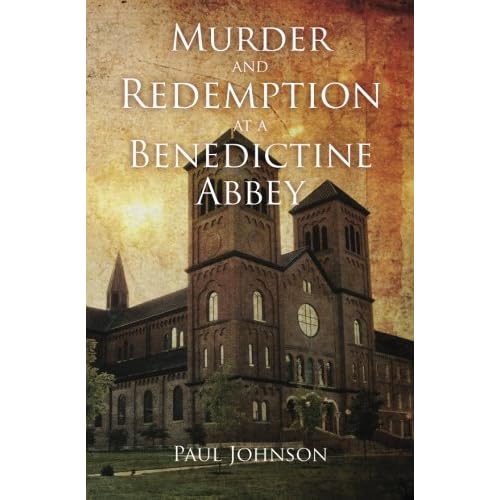
But it's finally happened, though in the end I had to get it done myself, employing the good folks at CreateSpace to publish my book, Murder and Redemption at a Benedictine Abbey, in paperback format. Self-publication was never my first choice for the book and a couple of years ago it looked like Paulist Press was going to publish it in the traditional manner.  But bad timing (the recession of 2008), and my own need to do some last-minute revisions on the manuscript led to the cancellation of my contract.  After stewing about narrowly-missed opportunities for a time, I decided to put it out on Kindle--and now, in paperback.


The link here will take you to the Amazon page for the paperback version.  You may notice that the cover image has changed from the original version for the Kindle.  I decided to make both editions consistent with the new cover design from CreateSpace, which is a more contemporary photograph of the Conception Abbey basilica and pretty impressive, I think.

You might also want to check out my website, designed by Sean Callahan of AVX Media.

Anyway, I hope you'll read the book and let me know what you think.

Battles and Barnacles

If you are male and a history nerd like me, you probably grew up reading books about warfare.  My obsession was the Civil War.  I especially loved poring over David Greenspan's battle maps in The American Heritage Picture History of the Civil War, with all those little blue and gray figures marching around on beautifully rendered landscapes.  I read other Civil War books, including another American Heritage title, Ironclads of the Civil War.  I was fascinated by the Monitor and the Merrimack (rechristened Virginia) and their battle in Hampton Roads in 1862, where the two ironclads slugged it out for hours, fighting to a draw.

My fascination wasn't just about the cutting-edge technology that inventors like John Ericsson had developed for naval warfare.  I think it was more about the "futuristic" nature of the encounter at the time.  Ironclads would come to play an important role in the Civil War, especially on the rivers, but in 1861 they were Superweapons and looked alien and unearthly.  Since I was also heavily into reading science fiction at the time, that feature also appealed to my adolescent imagination.  It was very cool stuff.

The Monitor later went down in heavy seas off Cape Hatteras in 1862 (the Virginia was blown up by retreating Confederate forces).  Parts of the Union warship, including the turret, were raised in 2001 (NOAA website) and placed in a fresh-water bath to limit sea-water corrosion. Recently, according to an article in the New York Times, the turret has been in the open air having the barnacles and sediment scraped from it, all live on webcam.  It's a big piece of history.  Makes me want to take out Ironclads of the Civil War and read it again and dream.

Sunday, August 7, 2011

A Teacher's August

I grew up the son of a teacher.  My mother taught first grade.  Every August in my home town in northern Minnesota, as the days began to shorten and the evenings cooled, I remember the feeling of a fleeting sweetness that was summer in a northern climate.  We'd be playing our outside games with friends with an almost desperate intensity, as if the hectic pace of our play might slow the time.  After my birthday on the sixth of the month (and my mom's the day before) the days seemed to slide quickly into the next school year. Mom felt it keenly.  Too soon she would be back in the classroom teaching another batch of first-graders how to read and the other basic skills they needed to learn.

Now she's retired and I'm the teacher and when I pass the threshold of August I like to talk to her about how it felt back when she had to get ready for another year and how she's glad she doesn't have to do that any longer.  For me, the excitement is still there, in the week just before classes begin again.  That's always when it hits me, when the joy I feel as a teacher flames high again after the low-key burn of summer.  Soon I'll be back in the classroom, back doing what I love.  Oh, the summer's been good: I've been reading, writing, painting and drawing, traveling, working out, goofing off.  Still, break's nearly over and soon enough I'll be glad of it--in another week or so.  But not yet . . . not yet . . .

Saturday, August 6, 2011

Tennyson, the Bomb, and Transfiguration

"Our little systems have their day;
They have their day and cease to be:
They are but broken lights of thee,
And thou, O Lord, art more than they.

We have but faith: we cannot know;
For knowledge is of things we see
And yet we trust it comes from thee,
A beam in darkness: let it grow."
--Alfred, Lord Tennyson, "In Memoriam A.H.H." (1850)


"A bright light filled the plane. The first shock-wave hit us. We were eleven and a half miles slant range from the atomic explosion but the whole airplane cracked and crinkled from the blast... We turned back to look at Hiroshima. The city was hidden by that awful cloud... mushrooming, terrible and incredibly tall."
--Col. Paul Tibbets, commander of the Enola Gay, which dropped the first atomic bomb on Hiroshima.


"And he was transfigured before them, and his face shone like the sun, and his clothes became dazzling white."   --Matthew 17: 2


Today is an odd conjunction of four events.  First, it is Alfred, Lord Tennyson's birthday today.  He was born in 1809 and became England's most famous and celebrated poet of the mid-nineteenth century.  I continue to teach his poetry when I can, for I have always loved his strong command of image and sound.  In his poem "In Memoriam A.H.H." he uses light as a metaphor for the sometimes obscure paths of faith.   Today is also the 66th anniversary of the dropping of the first atomic bomb on Hiroshima.  "A bright light filled the plane," Colonel Paul Tibbets recalled.  The hundred million-degree, sun-bright inferno below incinerated thousands of Japanese civilians and hastened the end of World War II.  Today is also the Feast of the Transfiguration, and the revelation of a different kind of light, signifying our own transformations.  Today is also my birthday.  I see no particular significance in the coincidence of dates, but  the conjunction each year makes me think of our god-imaged potential as human beings and what we can create:  Poems, bombs, children.  It is a day of beginnings, endings, and all the transformations in between.

Wednesday, August 3, 2011

Between Two Worlds

Today I begin this blog of what I see and what I think, even if I have no clue what it all means. Mostly, I plan to stick to the concrete stuff and let the meaning leak out on its own.  Because of who I am and what I do, I tend to think a lot about religion, especially the meeting points between Protestantism and Catholicism.  Some of those thoughts will undoubtedly find a place here, along with musings about literature, history, and art, my main teaching subjects.

Because I am a Protestant teaching at a Catholic seminary college within a Benedictine monastery, helping to form young men for the Catholic priesthood, my day-to-day teaching experience is a little unusual compared to my friends from graduate school at the University of Wisconsin.  I am both "inside" the institutional structure of the Catholic Church, but also "outside" of it because of my particular expression of faith.  But not too far outside.  Over the twenty-one years of teaching at Conception, my faith has been formed by constant daily contact with the monks of Conception Abbey.  I have become more "monk-like" over these two decades simply from being around the men in black.  My faith has also been shaped by the young men I face every day in the classroom.  In a very real sense, they are my teachers.  I am grateful for their abiding witness to a transforming faith.

Now, in the latter days of summer, three weeks before the start of another semester, I find myself between two worlds, Protestant and Catholic, imagining what lies ahead, ready once again for the bends and bumps of the Pilgrim Road.

Walk along with me.