One of my former seminary students, who has just entered graduate school in theology at Mundelein, has been reading The Brothers Karamazov by Fyodor Dostoevski. He confessed recently that he found himself relating to Ivan Karamazov, the atheist intellectual, more than Alyosha, the religiously devoted brother who seeks to enter a monastery. It seemed a little strange to my seminarian, as if he had looked in the mirror one morning and seen the eyes of someone he didn't recognize looking back at him.
Dostoevsky knew that faith was not easy for an intellectual and boldly gave powerful expression to the attitudes he didn't necessarily sympathize with, which is one of the reasons The Brothers Karamazov is such a great novel. The character of Ivan Karamazov dramatizes the conflict between faith and reason in the most honest and poignant way possible. Dostoevski gives him such a compelling voice that it is not difficult to take him seriously, while at the same time deeply pitying him for his searing inner conflicts. Ivan's despair, inner desolation, cynicism and self-destruction make him a figure of deep pathos, particularly for anyone who has wrestled with the devouring Worm of Reason. I have taught philosophy in the seminary and I have at times battled the Worm and, like my seminarian, have sometimes looked to Ivan Karamazov as my soul-brother. Faith is not always easy. Nor should it be.
Saturday, August 27, 2011

Tuesday, August 23, 2011
Tolkien Tuesday
My first class today is Tolkien, one I teach every two years, usually in the Fall semester. Today I will introduce J. R. R. Tolkien and his love of languages (the basis of his mythology) to my students--about twenty at last count--and establish the basic approach to Tolkien's work that I'm going to follow during the semester. It's a reading-intensive course, since we will cover not only The Lord of the Rings in its entirety, but also The Hobbit and The Silmarillion. The latter work, which is really a collection of five different works, we will begin discussing on Thursday with Ainulindale and Valaquenta, two short works that kick off The Silmarillion and present, respectively, Tolkien's beautiful myth of creation and his pantheon of "gods" or Valar.
This is the fourth time I've taught Tolkien at Conception Seminary. A number of years ago I happened to pick up a copy of Tom Shippey's book J. R. R. Tolkien: Author of the Century from the Conception Library browsing table and got hooked into Middle-earth all over again. Originally I had been introduced to Tolkien in the eighth grade by a friend of mine who had spent the previous year in England with his family on a teaching exchange. He lent me an English edition of The Hobbit with one of Tolkien's drawings of the dragon Smaug on the cover. I will admit up front that I couldn't finish the book. It was a little too weird for me. I tried again with The Fellowship of the Ring--my own copy this time--and I couldn't stop reading. It was an entry into a secret, marvelous, dangerous and convincingly "real" world and soon my other friends were reading (and re-reading) it. We were Tolkien Nerds who could tell you the difference between Orcrist and Glamdring as well as all of Aragorn's other names. Later, when I was dating in college, I met a young woman named Carolyn who listened to me read the Lord of the Rings aloud. She must have liked it pretty well because she married me. Now our son Peter has taken on the mantle of Johnson Family Tolkien Nerd.
By the time I got to graduate school I had put Tolkien aside for other books, other needs and concerns. Then came my job at Conception with Catholic seminarians who loved both Harry Potter and, I soon discovered, Tolkien--especially when Peter Jackson's films began coming out. Since Tolkien was Catholic and consciously wrote The Lord of the Rings as a Catholic work, it seemed a good fit for a literature class at the seminary. It has turned out to be a popular course and I love teaching it. Moreover, I've discovered depths in Tolkien's work I'd never seen before, especially in relationship to character and spiritual formation, which is the centerpiece of our work with the seminarians at Conception Seminary College. But more than anything, Tolkien's work offers a damn good set of stories that are very teachable. So along with Bilbo, I say . . .
"What fun! What fun to be off again,
off on the Road with dwarves!"
This is the fourth time I've taught Tolkien at Conception Seminary. A number of years ago I happened to pick up a copy of Tom Shippey's book J. R. R. Tolkien: Author of the Century from the Conception Library browsing table and got hooked into Middle-earth all over again. Originally I had been introduced to Tolkien in the eighth grade by a friend of mine who had spent the previous year in England with his family on a teaching exchange. He lent me an English edition of The Hobbit with one of Tolkien's drawings of the dragon Smaug on the cover. I will admit up front that I couldn't finish the book. It was a little too weird for me. I tried again with The Fellowship of the Ring--my own copy this time--and I couldn't stop reading. It was an entry into a secret, marvelous, dangerous and convincingly "real" world and soon my other friends were reading (and re-reading) it. We were Tolkien Nerds who could tell you the difference between Orcrist and Glamdring as well as all of Aragorn's other names. Later, when I was dating in college, I met a young woman named Carolyn who listened to me read the Lord of the Rings aloud. She must have liked it pretty well because she married me. Now our son Peter has taken on the mantle of Johnson Family Tolkien Nerd.
By the time I got to graduate school I had put Tolkien aside for other books, other needs and concerns. Then came my job at Conception with Catholic seminarians who loved both Harry Potter and, I soon discovered, Tolkien--especially when Peter Jackson's films began coming out. Since Tolkien was Catholic and consciously wrote The Lord of the Rings as a Catholic work, it seemed a good fit for a literature class at the seminary. It has turned out to be a popular course and I love teaching it. Moreover, I've discovered depths in Tolkien's work I'd never seen before, especially in relationship to character and spiritual formation, which is the centerpiece of our work with the seminarians at Conception Seminary College. But more than anything, Tolkien's work offers a damn good set of stories that are very teachable. So along with Bilbo, I say . . .
"What fun! What fun to be off again,
off on the Road with dwarves!"
Monday, August 22, 2011
The Day Before
This morning, as a thunderstorm grumbles and rumbles its way out of Iowa over us here in Maryville, I'm getting used to the fact that a new semester begins tomorrow. Today, Monday, August 22 is the Day Before, which is a good day most years. It's the day when students like to drop in on me and see how my summer's gone, when I'm taking care of all of those jobs that need doing before classes start. I'm not teaching yet, but I'm thinking a lot about teaching and enjoying the anticipation of being in the classroom again. When I was a young teacher this was Freak Out Day and I never felt ready; now, decades later, it feels like slipping into a comfortable pair of shoes.
Tuesday, August 16, 2011
Blue Highways
There are times for taking freeways, and there are times for blue highways. That's a term from William Least Heat-Moon, who coined it in his book by the same name. Blue highways are the two-lane blacktops, the backroads that go through the small towns (and sometimes large ones). For speed there's the freeway, where the semi trucks hustled you along and the land rolls by like moving theater flats with painted trees and barns. They'll get you where you're going. The blue highways will get you there, too, but you take your chances with slow cars and farm vehicles and road repair. I drive them when I need time to think things out, to feel the places I'm driving through, the crossroads and curves and towns and everything crowding down to the shoulder where I can linger over it with my eyes as I pass. The interstates are all about getting there; blue highways are about the journey.
Most of the time when I drive north to Minnesota I take the freeway, I-35. But there are times, if I'm driving alone and time isn't an issue, that I deliberately avoid it, as I did this past week when I left Maryville and caught Route One Sixty Nine in Mt. Ayre, Iowa, an hour northeast of here.

The route is one of the old trunk routes that funneled cars through the country before freeways were built. It comes up through Wichita, Kansas City and St. Joseph, before heading north, unspooling itself through the small Iowa towns with their tall grain elevators and corrugated metal corn cribs, faded “Butler” stenciling on the sides, their brick stores and courthouses and red-brick Lutheran and Catholic churches. On the map, Iowa counties look deceptively predictable and uncomplicated, like evenly stacked rows of square blocks. Small green signs marked their boundaries: Union, Madison, Dallas, Boone. There is a clarity in the wide fields and straight gravel roads, the neat little towns with their white houses that throw back the sunlight like bright mirrors. Up in Minnesota the route gets more diverse and complicated, dropping from the prairie into the heavily wooded Minnesota River Valley, following the river northeast into the western suburbs of Minneapolis before it's final run into the north woods of Minnesota. The sky is a strip of clouded-flecked blue between the trees and the horizon is the next bend in the road. And all the way the air is getting steadily cooler and drier.
My way back started on Monday after a few days visiting my mother and sister. I decided to follow the Mississippi all the way down to southern Iowa, then cut west across the state to Maryville, a longer trip of nearly one thousand miles that took a day and a half. Along the way, besides seeing some beautiful scenery, I stumbled over some great places to eat such as Emily's Luncheon in Webster, Wisconsin, where customers sit at tables in the dining room while Marilyn makes and serves a homemade meal from her kitchen. It was the best road breakfast I've ever eaten and I told her so. "I'll take that as a compliment," she said with a slight smile. Or the Stockholm Pie Company in the little river town of Stockholm, WI, where I had a piece of French Silk pie and coffee during an afternoon pause in traveling. I saw barges on the river, deer and bear peering out of the edges of the woods, and enough blacktop under my wheels to bring a satisfied end to the summer.
Most of the time when I drive north to Minnesota I take the freeway, I-35. But there are times, if I'm driving alone and time isn't an issue, that I deliberately avoid it, as I did this past week when I left Maryville and caught Route One Sixty Nine in Mt. Ayre, Iowa, an hour northeast of here.

The route is one of the old trunk routes that funneled cars through the country before freeways were built. It comes up through Wichita, Kansas City and St. Joseph, before heading north, unspooling itself through the small Iowa towns with their tall grain elevators and corrugated metal corn cribs, faded “Butler” stenciling on the sides, their brick stores and courthouses and red-brick Lutheran and Catholic churches. On the map, Iowa counties look deceptively predictable and uncomplicated, like evenly stacked rows of square blocks. Small green signs marked their boundaries: Union, Madison, Dallas, Boone. There is a clarity in the wide fields and straight gravel roads, the neat little towns with their white houses that throw back the sunlight like bright mirrors. Up in Minnesota the route gets more diverse and complicated, dropping from the prairie into the heavily wooded Minnesota River Valley, following the river northeast into the western suburbs of Minneapolis before it's final run into the north woods of Minnesota. The sky is a strip of clouded-flecked blue between the trees and the horizon is the next bend in the road. And all the way the air is getting steadily cooler and drier.
My way back started on Monday after a few days visiting my mother and sister. I decided to follow the Mississippi all the way down to southern Iowa, then cut west across the state to Maryville, a longer trip of nearly one thousand miles that took a day and a half. Along the way, besides seeing some beautiful scenery, I stumbled over some great places to eat such as Emily's Luncheon in Webster, Wisconsin, where customers sit at tables in the dining room while Marilyn makes and serves a homemade meal from her kitchen. It was the best road breakfast I've ever eaten and I told her so. "I'll take that as a compliment," she said with a slight smile. Or the Stockholm Pie Company in the little river town of Stockholm, WI, where I had a piece of French Silk pie and coffee during an afternoon pause in traveling. I saw barges on the river, deer and bear peering out of the edges of the woods, and enough blacktop under my wheels to bring a satisfied end to the summer.
Tuesday, August 9, 2011
Publication
'Tis pleasant, sure, to see one's name in print;
A book's a book, although there's nothing in 't.
--Byron
This quote from Lord Byron's Don Juan has long been pinned to my bulletin board. Byron was famous for his satiric sense of humor, and I believe I put it up after the first of many unsuccessful tries at getting published years ago, wanting to ease the bite of continued failure by way of the poet's sardonic wit.
But it's finally happened, though in the end I had to get it done myself, employing the good folks at CreateSpace to publish my book, Murder and Redemption at a Benedictine Abbey, in paperback format. Self-publication was never my first choice for the book and a couple of years ago it looked like Paulist Press was going to publish it in the traditional manner. But bad timing (the recession of 2008), and my own need to do some last-minute revisions on the manuscript led to the cancellation of my contract. After stewing about narrowly-missed opportunities for a time, I decided to put it out on Kindle--and now, in paperback.
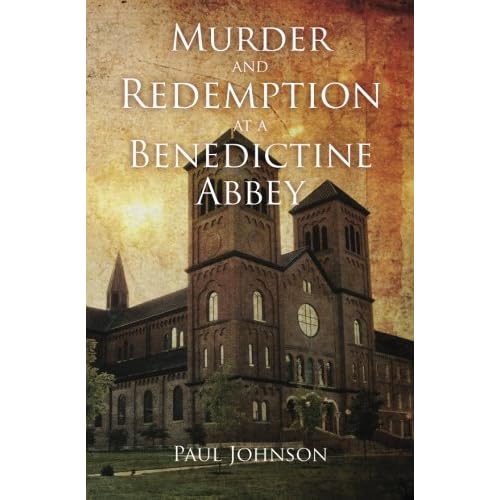
The link here will take you to the Amazon page for the paperback version. You may notice that the cover image has changed from the original version for the Kindle. I decided to make both editions consistent with the new cover design from CreateSpace, which is a more contemporary photograph of the Conception Abbey basilica and pretty impressive, I think.
You might also want to check out my website, designed by Sean Callahan of AVX Media.
Anyway, I hope you'll read the book and let me know what you think.
A book's a book, although there's nothing in 't.
--Byron
This quote from Lord Byron's Don Juan has long been pinned to my bulletin board. Byron was famous for his satiric sense of humor, and I believe I put it up after the first of many unsuccessful tries at getting published years ago, wanting to ease the bite of continued failure by way of the poet's sardonic wit.
But it's finally happened, though in the end I had to get it done myself, employing the good folks at CreateSpace to publish my book, Murder and Redemption at a Benedictine Abbey, in paperback format. Self-publication was never my first choice for the book and a couple of years ago it looked like Paulist Press was going to publish it in the traditional manner. But bad timing (the recession of 2008), and my own need to do some last-minute revisions on the manuscript led to the cancellation of my contract. After stewing about narrowly-missed opportunities for a time, I decided to put it out on Kindle--and now, in paperback.
The link here will take you to the Amazon page for the paperback version. You may notice that the cover image has changed from the original version for the Kindle. I decided to make both editions consistent with the new cover design from CreateSpace, which is a more contemporary photograph of the Conception Abbey basilica and pretty impressive, I think.
You might also want to check out my website, designed by Sean Callahan of AVX Media.
Anyway, I hope you'll read the book and let me know what you think.
Battles and Barnacles
If you are male and a history nerd like me, you probably grew up reading books about warfare. My obsession was the Civil War. I especially loved poring over David Greenspan's battle maps in The American Heritage Picture History of the Civil War, with all those little blue and gray figures marching around on beautifully rendered landscapes. I read other Civil War books, including another American Heritage title, Ironclads of the Civil War. I was fascinated by the Monitor and the Merrimack (rechristened Virginia) and their battle in Hampton Roads in 1862, where the two ironclads slugged it out for hours, fighting to a draw.
My fascination wasn't just about the cutting-edge technology that inventors like John Ericsson had developed for naval warfare. I think it was more about the "futuristic" nature of the encounter at the time. Ironclads would come to play an important role in the Civil War, especially on the rivers, but in 1861 they were Superweapons and looked alien and unearthly. Since I was also heavily into reading science fiction at the time, that feature also appealed to my adolescent imagination. It was very cool stuff.
The Monitor later went down in heavy seas off Cape Hatteras in 1862 (the Virginia was blown up by retreating Confederate forces). Parts of the Union warship, including the turret, were raised in 2001 (NOAA website) and placed in a fresh-water bath to limit sea-water corrosion. Recently, according to an article in the New York Times, the turret has been in the open air having the barnacles and sediment scraped from it, all live on webcam. It's a big piece of history. Makes me want to take out Ironclads of the Civil War and read it again and dream.
My fascination wasn't just about the cutting-edge technology that inventors like John Ericsson had developed for naval warfare. I think it was more about the "futuristic" nature of the encounter at the time. Ironclads would come to play an important role in the Civil War, especially on the rivers, but in 1861 they were Superweapons and looked alien and unearthly. Since I was also heavily into reading science fiction at the time, that feature also appealed to my adolescent imagination. It was very cool stuff.
The Monitor later went down in heavy seas off Cape Hatteras in 1862 (the Virginia was blown up by retreating Confederate forces). Parts of the Union warship, including the turret, were raised in 2001 (NOAA website) and placed in a fresh-water bath to limit sea-water corrosion. Recently, according to an article in the New York Times, the turret has been in the open air having the barnacles and sediment scraped from it, all live on webcam. It's a big piece of history. Makes me want to take out Ironclads of the Civil War and read it again and dream.
Sunday, August 7, 2011
A Teacher's August
I grew up the son of a teacher. My mother taught first grade. Every August in my home town in northern Minnesota, as the days began to shorten and the evenings cooled, I remember the feeling of a fleeting sweetness that was summer in a northern climate. We'd be playing our outside games with friends with an almost desperate intensity, as if the hectic pace of our play might slow the time. After my birthday on the sixth of the month (and my mom's the day before) the days seemed to slide quickly into the next school year. Mom felt it keenly. Too soon she would be back in the classroom teaching another batch of first-graders how to read and the other basic skills they needed to learn.
Now she's retired and I'm the teacher and when I pass the threshold of August I like to talk to her about how it felt back when she had to get ready for another year and how she's glad she doesn't have to do that any longer. For me, the excitement is still there, in the week just before classes begin again. That's always when it hits me, when the joy I feel as a teacher flames high again after the low-key burn of summer. Soon I'll be back in the classroom, back doing what I love. Oh, the summer's been good: I've been reading, writing, painting and drawing, traveling, working out, goofing off. Still, break's nearly over and soon enough I'll be glad of it--in another week or so. But not yet . . . not yet . . .
Now she's retired and I'm the teacher and when I pass the threshold of August I like to talk to her about how it felt back when she had to get ready for another year and how she's glad she doesn't have to do that any longer. For me, the excitement is still there, in the week just before classes begin again. That's always when it hits me, when the joy I feel as a teacher flames high again after the low-key burn of summer. Soon I'll be back in the classroom, back doing what I love. Oh, the summer's been good: I've been reading, writing, painting and drawing, traveling, working out, goofing off. Still, break's nearly over and soon enough I'll be glad of it--in another week or so. But not yet . . . not yet . . .
Saturday, August 6, 2011
Tennyson, the Bomb, and Transfiguration
"Our little systems have their day;
They have their day and cease to be:
They are but broken lights of thee,
And thou, O Lord, art more than they.
We have but faith: we cannot know;
For knowledge is of things we see
And yet we trust it comes from thee,
A beam in darkness: let it grow."
--Alfred, Lord Tennyson, "In Memoriam A.H.H." (1850)
"A bright light filled the plane. The first shock-wave hit us. We were eleven and a half miles slant range from the atomic explosion but the whole airplane cracked and crinkled from the blast... We turned back to look at Hiroshima. The city was hidden by that awful cloud... mushrooming, terrible and incredibly tall."
--Col. Paul Tibbets, commander of the Enola Gay, which dropped the first atomic bomb on Hiroshima.
"And he was transfigured before them, and his face shone like the sun, and his clothes became dazzling white." --Matthew 17: 2
Today is an odd conjunction of four events. First, it is Alfred, Lord Tennyson's birthday today. He was born in 1809 and became England's most famous and celebrated poet of the mid-nineteenth century. I continue to teach his poetry when I can, for I have always loved his strong command of image and sound. In his poem "In Memoriam A.H.H." he uses light as a metaphor for the sometimes obscure paths of faith. Today is also the 66th anniversary of the dropping of the first atomic bomb on Hiroshima. "A bright light filled the plane," Colonel Paul Tibbets recalled. The hundred million-degree, sun-bright inferno below incinerated thousands of Japanese civilians and hastened the end of World War II. Today is also the Feast of the Transfiguration, and the revelation of a different kind of light, signifying our own transformations. Today is also my birthday. I see no particular significance in the coincidence of dates, but the conjunction each year makes me think of our god-imaged potential as human beings and what we can create: Poems, bombs, children. It is a day of beginnings, endings, and all the transformations in between.
They have their day and cease to be:
They are but broken lights of thee,
And thou, O Lord, art more than they.
We have but faith: we cannot know;
For knowledge is of things we see
And yet we trust it comes from thee,
A beam in darkness: let it grow."
--Alfred, Lord Tennyson, "In Memoriam A.H.H." (1850)
"A bright light filled the plane. The first shock-wave hit us. We were eleven and a half miles slant range from the atomic explosion but the whole airplane cracked and crinkled from the blast... We turned back to look at Hiroshima. The city was hidden by that awful cloud... mushrooming, terrible and incredibly tall."
--Col. Paul Tibbets, commander of the Enola Gay, which dropped the first atomic bomb on Hiroshima.
"And he was transfigured before them, and his face shone like the sun, and his clothes became dazzling white." --Matthew 17: 2
Today is an odd conjunction of four events. First, it is Alfred, Lord Tennyson's birthday today. He was born in 1809 and became England's most famous and celebrated poet of the mid-nineteenth century. I continue to teach his poetry when I can, for I have always loved his strong command of image and sound. In his poem "In Memoriam A.H.H." he uses light as a metaphor for the sometimes obscure paths of faith. Today is also the 66th anniversary of the dropping of the first atomic bomb on Hiroshima. "A bright light filled the plane," Colonel Paul Tibbets recalled. The hundred million-degree, sun-bright inferno below incinerated thousands of Japanese civilians and hastened the end of World War II. Today is also the Feast of the Transfiguration, and the revelation of a different kind of light, signifying our own transformations. Today is also my birthday. I see no particular significance in the coincidence of dates, but the conjunction each year makes me think of our god-imaged potential as human beings and what we can create: Poems, bombs, children. It is a day of beginnings, endings, and all the transformations in between.
Wednesday, August 3, 2011
Between Two Worlds
Today I begin this blog of what I see and what I think, even if I have no clue what it all means. Mostly, I plan to stick to the concrete stuff and let the meaning leak out on its own. Because of who I am and what I do, I tend to think a lot about religion, especially the meeting points between Protestantism and Catholicism. Some of those thoughts will undoubtedly find a place here, along with musings about literature, history, and art, my main teaching subjects.
Because I am a Protestant teaching at a Catholic seminary college within a Benedictine monastery, helping to form young men for the Catholic priesthood, my day-to-day teaching experience is a little unusual compared to my friends from graduate school at the University of Wisconsin. I am both "inside" the institutional structure of the Catholic Church, but also "outside" of it because of my particular expression of faith. But not too far outside. Over the twenty-one years of teaching at Conception, my faith has been formed by constant daily contact with the monks of Conception Abbey. I have become more "monk-like" over these two decades simply from being around the men in black. My faith has also been shaped by the young men I face every day in the classroom. In a very real sense, they are my teachers. I am grateful for their abiding witness to a transforming faith.
Now, in the latter days of summer, three weeks before the start of another semester, I find myself between two worlds, Protestant and Catholic, imagining what lies ahead, ready once again for the bends and bumps of the Pilgrim Road.
Walk along with me.
Because I am a Protestant teaching at a Catholic seminary college within a Benedictine monastery, helping to form young men for the Catholic priesthood, my day-to-day teaching experience is a little unusual compared to my friends from graduate school at the University of Wisconsin. I am both "inside" the institutional structure of the Catholic Church, but also "outside" of it because of my particular expression of faith. But not too far outside. Over the twenty-one years of teaching at Conception, my faith has been formed by constant daily contact with the monks of Conception Abbey. I have become more "monk-like" over these two decades simply from being around the men in black. My faith has also been shaped by the young men I face every day in the classroom. In a very real sense, they are my teachers. I am grateful for their abiding witness to a transforming faith.
Now, in the latter days of summer, three weeks before the start of another semester, I find myself between two worlds, Protestant and Catholic, imagining what lies ahead, ready once again for the bends and bumps of the Pilgrim Road.
Walk along with me.
Subscribe to:
Comments (Atom)